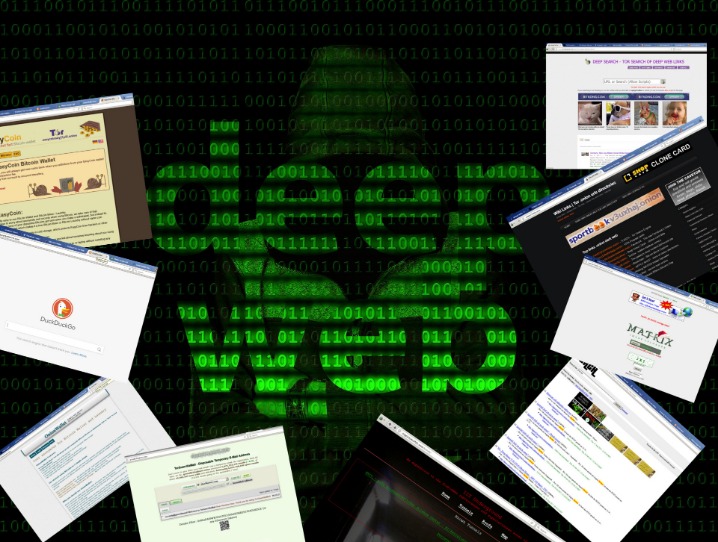
Traditional firewalls and antivirus programs no longer suffice, especially when attackers operate with military-grade tools sourced from the dark web. Criminals now purchase ready-to-use malware kits, phishing templates, and ransomware programs. These tools come with user manuals and customer support, enabling even non-technical actors to conduct complex cyberattacks. In summary, beyond 2025, dark-web marketplaces will increasingly blend cutting-edge technologies with adaptive strategies to survive in an environment marked by heightened regulatory oversight and shifting user priorities. Users and cybersecurity professionals alike must stay informed and prepared to navigate this rapidly changing digital frontier.
Explicit And Illegal Content
Rather than advertising publicly accessible onion links, some marketplaces operate on hidden or rotating domain names, accessible only through personal referrals or vetted membership. These secretive groups often communicate via encrypted messaging services, employing layers of verification to filter out potential law enforcement infiltrators. Law enforcement agencies worldwide employ an evolving array of strategies to track, infiltrate, and ultimately dismantle darknet marketplaces. These methods combine traditional policing techniques—such as undercover operations—with cutting-edge technological measures and multinational coordination.
Cypher Marketplace
Private cybersecurity firms must strengthen partnerships with regulators to track illegal transactions and monitor emerging threats. Blockchain analytics tools must evolve to include privacy coins and decentralized systems. Cybersecurity teams must proactively monitor for leaked data and increase resilience against ransomware and phishing campaigns.
Popular Dark Web Marketplaces And Cryptocurrencies

Treasury remains focused on the risks posed by darknet marketplaces, as highlighted in previous designations of Genesis Market on April 5, 2023, and of Hydra Market on April 5, 2022. With the rise of decentralized marketplaces on the darknet, I thought it would be helpful to dive into how they work and why they’re becoming increasingly popular. This post aims to provide a comprehensive overview of decentralized marketplaces, their benefits, and how they differ from traditional darknet markets. These markets sell a range of illegal goods and services, including drugs, weapons, stolen data, and counterfeit items, and they typically require special software like Tor for access.
Access This Chapter
Unfortunately, the dark web hosts not only explicit but also deeply illegal and disturbing content. The markets often share materials related to child exploitation, pornography, and non-consensual recordings, all of which are serious crimes that inflict lasting harm on real-life victims. Understandably, as in the case with most illicit trade markets, you don’t even need to verify your email Awazon. Now that you understand what the dark web is all about, you might wonder why other people do things on it. Darknet marketplaces like to exist on the dark web because it offers a service that the regular internet, or more accurately, the “surface web,” does not. Despite these efforts, dark web operators rebuild quickly, often with better security and decentralized tools.
P2P (Peer-to-Peer) Exchanges
Word’s out they’re going decentralized in 2025—less downtime, more trust, right in line with where things are headed. The site’s slick—vendor stats update live, checkout’s a breeze, and the vibe’s modern without being over-the-top. I’ve used it a handful of times; deliveries landed smooth via DeadDrops—plain packaging, no fuss. It’s not the biggest player like Abacus, but it’s got a loyal crew and uptime that rarely blinks.
Treasury Payments
Furthermore, law enforcement worldwide has stepped up its efforts, seized assets, and disrupted key money laundering networks. In this article, you’ll find detailed overviews of the top ten Dark-Web marketplaces currently dominating the hidden internet landscape in 2025. We’ll explore their unique features, common use-cases—both legitimate and illicit—and the significant risks users face when interacting with these platforms. The Dark Web—a hidden part of the internet accessible only through specialized software like Tor—has become increasingly significant as we enter 2025. Often portrayed as the internet’s shadowy underbelly, the Dark Web hosts marketplaces offering everything from privacy tools and digital currencies to more questionable, or outright illegal, products and services.
- It was the first big site where people could anonymously buy drugs using Bitcoin, and it gained a lot of attention, until it was shut down by the FBI in 2013.
- Some use them due to privacy concerns, such as journalists talking to informants or whistleblowers, while others may simply want to protect their confidential information from observation or tracking.
- By consistently applying these straightforward security tips, you can significantly mitigate risks and better protect your privacy, finances, and legal standing when interacting with dark-web marketplaces.
- However, blockchain transparency allows law enforcement to trace illicit transactions, leading to asset freezes and sanctions on facilitators.
- Just like on the regular internet, phishing is a big problem on the dark web as well.
- These tools scan dark web forums and marketplaces for any signs of your compromised credentials.
About TRM LabsThis report was written by TRM Labs, the blockchain intelligence company. We work with crypto businesses, financial institutions and government agencies to monitor, detect and investigate fraud and financial crime in crypto. Cash-to-crypto services can be used to cash out the illicit proceeds of crime during the integration stage. TRM Labs has tracked the use of crypto ATMs by suspected perpetrators of severe illicit activity, including terrorist financing and CSAM.
For those who are looking for a reliable Alphabay Market alternative, Awazon Market aspires to become the solution. Established in 2020, Awazon Market has quickly become one of the most famous darknet marketplaces. You can find a lot of goods and services packed with stealth high-level encryption, no JavaScript, and anti-DDoS protection. Unlike regular e-commerce sites, markets on the dark web often deal with illegal or highly restricted goods and services, such as fake documents, hard drugs, and hacking services. Sure, you might come across listings for legit products like handcrafted jewelry or digital art, but those are few and far between. In 2025, alliances between cybercriminal syndicates and state-backed hackers have grown more common.
I’ve been poking around these places for a while now, from the giants like Abacus to the old-timers like Vice City. This isn’t just a quick list; it’s the full scoop on what they offer, how they keep things tight, and why they’re worth your time—or not. Whether you’re new to the dark web or a vet who’s seen it all, you’ll find something here to chew on.
Is It Illegal To Access The Dark Web?
Ideal marketplaces support anonymous browsing through networks like Tor and I2P, utilize privacy-focused cryptocurrencies such as Monero, and implement measures to prevent tracking and transaction tracing. Platforms that provide clear guidelines for maintaining operational security (OpSec) and offer built-in tools for data obfuscation are especially favored. Dark-web marketplaces operate through encrypted networks, primarily utilizing anonymity-enhancing technologies such as Tor (The Onion Router) and I2P (Invisible Internet Project). These technologies obscure users’ identities and locations by routing their internet traffic through multiple volunteer-operated servers worldwide, making it extremely difficult to trace activities back to individuals. Tor remains the most prevalent method due to its ease of use and robust anonymity features, but the popularity of I2P is steadily growing due to its increased resistance to surveillance and censorship.
If someone has the market’s code to the infrastructure, no matter how much effort law enforcement puts in, it will keep coming back on another server or can be built again with the same branding. Later, in 2013, Silk Road caught the attention of law enforcement and policymakers like US Senator Charles Schumer, who publicly called for a federal crackdown. That push led to the arrest of Ross Ulbricht, the founder of Silk Road, after a long and intense investigation.