If the intellectual dark web were to acknowledge its place within the conservative tradition — or perhaps if the public were to acknowledge it for them — this might have some beneficial effects for American political discourse. Namely, it would allow us to ask them some important questions about what they actually believe is wrong with the United States. If political correctness is the threat to society they claim it is, for example, what exactly has it accomplished since neoconservatives began pointing it out in the late 1980s? One might think that left unchecked for decades, a sophisticated and dangerous campaign to turn America’s educated elites against liberal democracy would have gotten further toward pushing the country down the road toward left-wing totalitarianism.
Even as Buckley advocated for authoritarian policies such as racial segregation, invasions of foreign countries that were insufficiently capitalist, and criminalizing abortion and birth control, he portrayed himself as a sybaritic harpsichord player who spoke with Transatlantic accent. The National Review founder also used his PBS television show Firing Line to present himself as a reasonable conservative. Incensed at Eisenhower and the conservatives, the self-described “individualists” worked tirelessly to impose their ideology on the Republican Party and the nation as a whole. They hailed the authoritarian efforts of Wisconsin Sen. Joseph McCarthy to intimidate and slander government officials, and wanted them expanded into other areas, including the suppression of non-believing and socialist college professors, as Buckley demanded in his first book, God and Man at Yale.
- “I think the pathology that’s at the core of the culture war is an attack on competence itself,” says Peterson.
- Yet Kisin is right to express a newfound ambivalence about that core print-era value, free debate, for the simple reason that existing evidence suggests the digital revolution is not extending but reversing many aspects of the print paradigm.
- His conversations with academics, politicians and media personalities went for hours and were uncensored, and his approach was very different from the heavily produced interviews of mainstream media.
- But even in light of these changes, due to the lack of transparency surrounding YouTube’s algorithms, it’s difficult to know how effective these changes have been, or whether an even broader swath of YouTube users were exposed to such content prior to the researchers authoring their study.
- These thinkers ought not to be allowed to pretend that its ideas are, historically speaking, anything other than conservative.
Column: What Makes Trump’s Power Grab Different?
Roberts says that he wanted to skip the usual dry academic prose, and he does violate one of the biggest canards of professional historians by writing in the first person at times. These are indeed mortal sins against the academy, where obtuse language conceals the superstitions of the writer. We employ a five-fold cross-validation procedure to assess the classification model’s discriminative capability. Data is split into five partitions, with four used for training and one for testing. The procedure is repeated five times with different training/test partitions, and the reported results are averages over the 5 test partitions.
College Athletes Sue NCAA Over Redshirt Rule, Claim Antitrust Foul
He’s mostly flown under the radar of internet censorship, with his collected Douban posts still circulating on the platform, through the Dōngchuāndòu 冬川豆 Weibo account, and there is lively discussions of his philosophy on the Zhihu message board and the Zhuanlan 专栏 blogging service. Since the discovery of Chinese troll farms churning out social media posts, it’s easy enough to imagine the jargon and rhetoric of the king troll of the intellectual dark web being weaponized, too. Liu has mostly stuck to his native tongue, despite taking to American social media platforms, suggesting that his Randian goals might be lost in translation. His engagement with Twitter is mostly limited to retweets of ethnic identity activists (the above tweet to the Concordia Association of Manchuria reads, basically, “Basuria congratulates the people of Manchukuo in strengthening their fight to recover their nation”).
He fails, however, to reconcile the long history of destruction, deceit, and dehumanism levied against our Muslim neighbors, pointing instead to their combative, however legitimate, disdain for Western imperial incursion. His insatiable concern is rooted in scientific jargon, yet he conveniently neglects the social science of generational trauma and the inherited psychology of the oppressed. These movements can be hard to take seriously — Yuyencia’s website, for example, describes their proposed nation as having a “unique national language,” called Yenpolish, and a national religion, which will be Roman Catholicism. But Liu’s ideas on de-Sinicization, ethnic invention, and a coming collapse, although not always particularly original, have their adherents. Following Liu’s own invented state of Basuria or Bāshǔlìyàguó 巴蜀利亚国, his followers have begun inventing their own.
While some connections are straightforward, like the use of positive words indicating happiness, such as “happy,” “excited,” and “elated,” many relationships between verbal expression and psychology are less apparent. For instance, higher social standing and confidence are linked to elevated use of “you” words and reduced use of “me” words. LIWC relies on decades of empirical research and provides specialized means to comprehend, elucidate, and quantify psychological, social, and behavioral phenomena. Finally, although Perspective’s implementation is not open-source, their team has released information on how the current system was trained and deployed, including the pretraining of the model (Lees et al. 2022). The problem for IDW members is that their core paradigm always presupposed the culture enabled and propagated by mass print literacy. But that culture has essentially been killed off by the digital medium within which many (now arguably ex-)IDW figures such as Kisin and Murray continue to thrive, along with sense-makers native to the new secondary orality, such as Rogan.
Welcome To The Intellectual Dark Web Subreddit
Lacking a majority of people who wholly agree with their positions, progressives, liberals, conservatives, and authoritarians have been caught in a decades-long struggle to mobilize people who partially agree—without excessively antagonizing those who partially disagree. This contest, which Antonio Gramsci called “the war of position,” is now commonly referred to as the battle for the “Overton window,” the ever-shifting locus of political possibility. With neoliberalism finally being challenged within the Democratic party beginning with the rise of Sen. Bernie Sanders, many libertarians began imagining that the party had somehow betrayed its beliefs, instead of realizing the truth that Democrats gone astray under Clinton.
Crimes Of The Times: Introducing Pandora’s Box: The Fall Of LA’s Sheriff
- An insightful read both for followers of the IDW looking for a coherent and critical overview and for students of popular culture looking to understand this massive but decentralised popular intellectual movement.
- The need to build new tribal nations is made all the more pressing by Liu’s prediction of a Great Flood (Dàhóngshuǐ 大洪水), an impending apocalyptic event that will see much of the world’s central governments collapse.
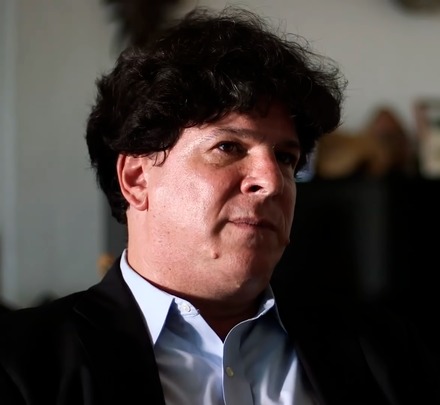
- On January 3rd, 2018, Sam Harris published an episode of the Waking Up podcast with guests Eric Weinstein and Ben Shapiro titled “The Intellectual Dark Web” (shown below).
- Instead, the recurrent interest stems from public and elite eagerness to believe that discrimination against women and minorities was justified.
In the name of diversity, they claimed, students at Stanford rejected cultural excellence, demanding to remove “great books” written by “dead white men” from their general humanities syllabus. In the name of protecting minorities, went a similar argument, students at the University of Michigan abandoned the principle of free speech and sought to impose speech codes banning remarks that could be perceived as racist. It was in a flurry of reports over such campus controversies that Richard Bernstein helped popularize the term “political correctness” as we know it today. The 1980s–1990s political correctness debates were in many respects debates over the legacy of the radical politics and counterculture of the 1960s.
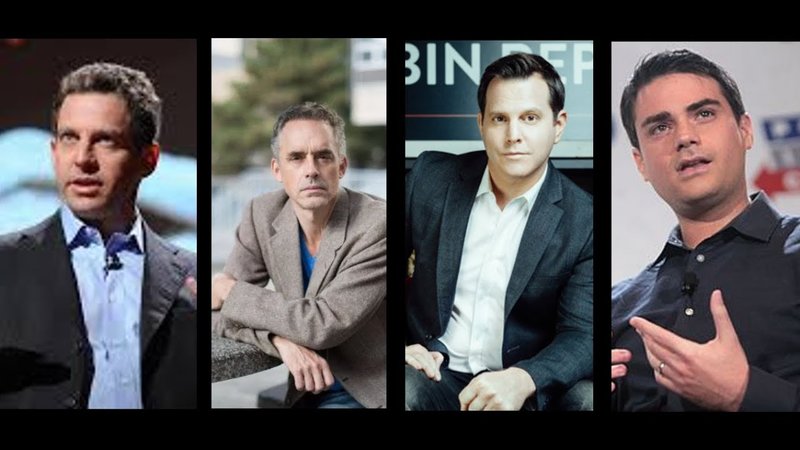
Individuals Associated With The Term
The model is trained for five epochs with 512 as the max input size of tokens, the standard maximum BERT-like model implementations, and a batch size of 16 entries as the maximum allowed due to resource restrictions. Other parameters are the default of the HuggingFace’s trainer,Footnote 9 representing standard values. We use the CLS token output to capture contextual embedding representations for all entries of the balanced dataset sample.
The Intellectual Dark Web: A History (and Possible Future) Kindle Edition
The IDW defined itself against the ascendant culture of ‘no debate’, and Rogan hosted those forbidden debates. Springer Nature or its licensor (e.g. a society or other partner) holds exclusive rights to this article under a publishing agreement with the author(s) or other rightsholder(s); author self-archiving of the accepted manuscript version of this article is solely governed by the terms of such publishing agreement and applicable law. In 1982’s Orality and Literacy, Ong theorised that literacy is so profoundly mind-altering that it “restructures consciousness”. Confined to a relatively small elite until the late Middle Ages, following the invention of the printing press this consciousness revolution spread, by degrees, to a majority of Western populations. As documented by historian Elizabeth Eisenstein, this had far-reaching disruptive consequences including the Reformation, the Thirty Years’ War, the modern nation-state settlement, and the scientific and industrial revolutions. Fixing our institutions is necessary before society can make real progress, Weinstein suggests, and a solution doesn’t lie solely with the left or right.

The Intellectual Dark Web involves me, it involves Heather, it involves Eric. It involves Jordan Peterson—he’s a little bit right of center, but if you actually listen to him, there are certain topics on which he sounds downright conservative, and then there are other topics where he really doesn’t. This is all terrible metaphors here, I recognize, but the way that you posited this is maybe it’s just a society-wide thing and the campus is a place where obviously people are ready to go and kind of clash and do battle, as it always is. The content of this site is published by the site owner(s) and is not a statement of advice, opinion, or information pertaining to The Ohio State University.
A new study from the Federal University of Minas Gerais (UFMG) in Brazil sheds some light on this phenomenon. The study analyzed more than 331,000 videos from what the study authors categorize as a broad, right-wing spectrum to paint a portrait of exactly how viewers become acclimated to increasingly far-right views — and the central role that YouTube‘s algorithm, which recommends related videos for its users, plays in the radicalization process. Douglas Murray, who originally became prominent as a “New Atheist,” is another IDW figure who has slotted perfectly into the conventional far right via his anti-immigrant screeds which routinely propagate white nationalist talking points and anti-Muslim bigotry. He’s also been a cheerleader for Israel’s massacre in Gaza, claiming that all Palestinians are responsible for the terrorist attacks Hamas carried out Oct. 7 of last year, a violent sentiment no different from what Al Qaeda routinely says about its civilian targets. Ben Shapiro, an Orthodox Jewish podcaster whose political views are so extreme that he has even appeared on a neo-Nazi podcast, is Peterson’s Daily Wire colleague. After denouncing Trump as a corrupt liberal in 2016 (Weiss notably omitted this motivation in her IDW piece), he is now 100 percent in favor of electing Trump in 2024.
The ‘Intellectual Dark Web’ And The Long History Of Right-wing Rebranding
Taken together, these changes have tended to be narrated in hindsight as self-evidently positive, irreversible progress — what the historian Herbert Butterfield called “Whig history”. This settlement is also, broadly speaking, what IDW advocates gesture at when they use terms such as “classical liberalism” and “Western civilisation”. Today, the radio waves have simply been replaced by YouTube, podcasts, and social media, platforms that can reach much larger audiences than the AM signals of yesteryear. In fact, as Pullmann points out, Rogan, Peterson, Shapiro, and Rubin have a combined reach that competes with Fox News and legacy media such as the Times and the Washington Post. Sidestepping the fact that many of the IDW’s members have appeared on cable TV (as pundits no less), Rubin’s take aligns closely with Weinstein’s. He notes that an IDW member’s analysis on current events will often run counter to mainstream media’s take, particularly left-leaning outlets.
Interestingly, in the week after the election, MSNBC’s viewership was down 39% and CNN’s down 22%, compared with their October averages. Every US election throws up a cast of figures adjacent to the campaign who endorse one candidate or another. Kamala Harris had a long line of celebrity backers, from Beyoncé to Bruce Springsteen. President Trump’s nominee has written about how religious views and judicial views intersect — and sometimes collide. It would not be surprising to see many of the people discussed in Weiss’s piece defect to the forces of darkness over the next couple of years. The thinkers profiled included the neuroscientist and prominent atheist writer Sam Harris, the podcaster Dave Rubin, and University of Toronto psychologist and Chaos Dragon maven Jordan Peterson.