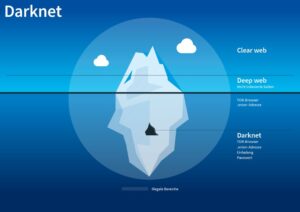
It’s a segment of the internet hidden from view, not showing up in search results or accessible through regular web browsers. To enter this hidden world, users rely on the Tor browser, a specialized tool designed to keep web activity private by bouncing it through a network of relays around the globe. This part of the internet also uses advanced encryption, which helps both those visiting and hosting sites to stay anonymous. Legal uses include forums for free speech and privacy, while illegal activities may involve the sale of drugs, weapons, or stolen data.
And no law in India will protect you from the sins that you committed. For instance, you indulge yourselves in promoting or watching child pornography. This is a crime in India, hence in this sense, over here, the dark web is illegal. The dark web originated in the mid-1990s by the United States Naval Research laboratory employees to protect US intelligence communications. Though developed with a bonafide intention, it, in the latter part, became a place for criminals to shoot their ill-minded activities. The Indian government does not recognize it as an illegal activity, because it is just another part of the internet that you are surfing, through TOR, Freenet, etc.
Unlawful Activities (Prevention) Act, 1967
Hidden from everyday browsing beneath social networks and corporate websites are a number of sites, markets, and forums that make up what is known as the Dark Web. According to the data, in 2023, there were over 2.5 million daily users in this hidden part of the web. By April of the same year, the usage had risen to around 2.7 million daily users, showing that people from all over the world are increasingly interested in concealing their online activities. In the deep net, web crawlers are blocked from accessing web pages to gather information for indexing, so the content remains hidden. Some content and services on the deep web are indexed by search engines, but paywalls or password protection prevent access.
Can WiFi Owners See Your Internet History?

There are media websites on the dark web—both legitimate and illegitimate—that allow users to access digital media outside the highly monitored surface web. As you might expect, these websites sometimes host explicit, gory, harmful, and illegal content. Mail providers Mailbox.org and Protonmail can also be accessed via an .onion link. This may be welcome news to those in states where security services have attempted to block ‘anonymous’ email websites like these from the open web.
The Deep Web includes unindexed content like private databases and password-protected sites accessible with standard browsers. Accessing the Dark Web, a part of the web that isn’t indexed by standard search engines, is not illegal in most countries. People use it for various legitimate reasons, such as bypassing censorship in restrictive countries. On the software end, the use of Tor and other anonymized browsers is not strictly illegal. In fact, these supposed “dark web” browsers are not tethered exclusively to this portion of the internet.
Human Trafficking And Illegal Services
- Though a large volume of traffic visits on the open web every day, it only represents 4% of the content on the internet.
- In an era defined by digital connectivity, protecting sensitive, critical and personal information from cyber threats – including those originating from the dark web – is a strategic imperative.
- Cybersecurity experts often use the dark web to stay ahead of cyber threats.
- These techniques, over time became public and thus led to the emergence of the hidden networks.
However, in countries like China, Iran, and Russia, using anonymizing tools may be against the law outright. The dark web comprises websites and communication platforms accessible only through anonymizing tools such as the Tor browser or I2P. Unlike the surface web—which search engines index—or the deep web containing private content behind authentication barriers, the dark web is intentionally concealed and requires specific software to enter.
How To Access The Dark Web On Iphone
However, if you go poking around in illegal sites and services or don’t practice good operational security by offering up personal information or trying to perform illegal activities, it very much isn’t safe. You may be targeted by law enforcement, exploited by hackers, or threatened by criminals using the dark web for nefarious purposes. The now-defunct online platform, DEER.IO, started operating at least in October 2013.
The Danger Of Tor Network
Diving into the deep web does attract some sort of peril for its users. Diving further into the abyss of this ocean that is the web, one will find the most hazardous content and activity. Usually, Tor websites are placed at the very end of the deep web (which is also considered as just the beginning of the dark web) and these are only accessible through an anonymous browser. In this manner, users can travel deep enough tangential pathways and end up on a piracy website, a politically radical forum or looking at disturbingly violent content.
CyberBestPractices
Law enforcement officials are getting better at finding and prosecuting owners of sites that sell illicit goods and services. In the summer of 2017, a team of cyber cops from three countries successfully shut down AlphaBay, the dark web’s largest source of contraband, sending shudders throughout the network. Dark web websites look pretty much like any other site, but there are important differences. That’s “a special-use top level domain suffix designating an anonymous hidden service reachable via the Tor network,” according to Wikipedia.
However, there are plenty of legal and legitimate online activities that require privacy and anonymity. The dark web is used by journalists, whistleblowers, and political activists who need the protections that it offers. Anything you need to do that has to be off the books to some extent, for noble or ignoble reasons, can be done on the dark web. Jurisdictional differences significantly impact the legal interpretation and enforcement of dark web activities.
Should any of your personal information ever be exposed in a data breach, spyware or phishing attack, there’s a good chance it will be taken to the dark web so a buyer can be found. Even completing a transaction is no guarantee that the goods will arrive. Many need to cross international borders, and customs officials are cracking down on suspicious packages.
Keeping All Tools, Software, And OS Up To Date

Let’s explore some of the illegal activities that thrive on the Dark Web. Since the Silk Road, several notable illegal marketplaces have risen and fallen, including AlphaBay, Hansa, and Wall Street Market. The persistent existence of these marketplaces underscores the ongoing challenge faced by law enforcement agencies in their efforts to combat illegal activities on the Dark Web.
While the Dark Web is infamous for its association with illegal activities, it is important to acknowledge that there are legal uses as well. Many individuals utilize the Dark Web to share sensitive information anonymously, conduct research in oppressive regimes, or communicate securely in regions with restricted internet access. However, the Dark Web is also home to illegal marketplaces, where drugs, weapons, stolen data, and hacking services are bought and sold. Engaging in such activities is a criminal offense and can result in severe legal consequences. Many marketplaces are specifically designed for the sale of illegal goods and services—narcotics, counterfeit currency, forged IDs, stolen credit card data, malware kits, and even human trafficking networks.
The dark web often carries a negative connotation, largely due to its association with illegal activities. However, it also offers significant advantages, especially in terms of privacy and security. For individuals living under oppressive regimes or anyone needing to communicate away from the watchful eyes of surveillance, the dark web is a valuable tool. A substantial portion of users turn to the Tor browser for its promise of anonymity, while others seek the additional security it provides. Curiosity about what the dark web has to offer also drives about one-third of its users. Originally used by the United States Department of Defense to communicate anonymously, the dark web has now become a hub for users wishing to remain anonymous around the world.