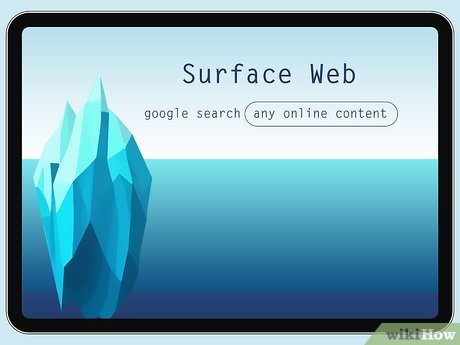
This version of the web is used by most of the world’s population for shopping, banking, entertainment and receiving the latest news. It is also heavily monitored by the world’s intelligence agencies and law enforcement on behalf of their governments. In today’s digitally interconnected world, confusion frequently arises around the terms dark web vs deep web. Both refer to unseen parts of the internet, but their purposes, access methods, and risks differ significantly.
- Search engines use automated programs known as “web crawlers” or “spiders” that systematically scan webpages, indexing their content.
- There are estimated to be 1.1 billion websites on the Surface Web as of 2025 (Internet Live Stats).
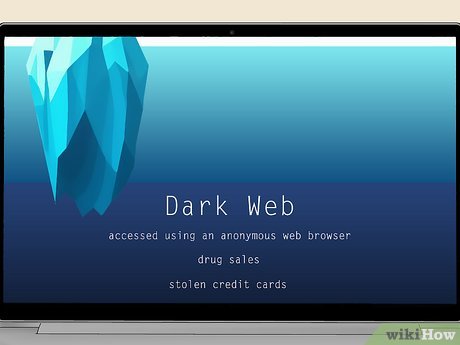
- The Dark Web is also where cybercriminal gangs commonly congregate and plan their attacks.
- Knowing the differences between the deep web and dark web can help protect your online safety when and if you choose to access each.
- The deep web refers to hidden web pages that are not indexed by search engines.
With an automated Threat Exposure Management solution, your security team can monitor both of these areas of the internet effectively. Niche apps like qTOX haven’t gained traction, and although Signal saw a slight uptick in use, it remains marginal. The deep web helps protect your private information, but is not in your hands. While the deep web can be considered safe as a whole, the further you venture, you can find yourself in danger.
It’s Hard To Access: False
The interconnection between these internet segments creates complex security challenges. The security implications of the surface web differ significantly from its hidden counterparts. From a regulatory perspective, the Deep Web aligns with mandates like GDPR, which demand controlled data environments. Businesses benefit from this, ensuring proprietary information remains exclusive.
Those who do will position their organizations not just to respond to threats—but to anticipate them. By demystifying the layers of the internet, organizations empower themselves to act decisively. Recognizing what lies within the deep dark web, and how it intersects with corporate risk and opportunity, is no longer optional. As part of their broader security program, leaders must consider how exposure on the deep web and dark web affects vendor selection, M&A risk assessments, and board-level reporting. The ability to explain the role of the deep dark web in cyber resilience—and respond proactively—can shape stakeholder confidence.
How Pipeline Protects
With that said, any regular internet user can visit the dark web, which is not illegal to use. In fact, it can be argued that the closure of Silk Road and the subsequent arrest and conviction of Ross Ulbricht, its founder, only heightened interest in darknets and their illegal wares. Sociologist Isak Ladegaard, who built an algorithm to monitor sales data on Silk Road-type marketplaces, declared that all the media coverage boosted people’s awareness of the existence of the dark web. You can also find websites to download copyrighted material such as music, movies, games, software, and even Netflix credentials. Some downloads contain malware for the fraudsters to hack the unsuspecting user later. Law enforcement agencies don’t pay much attention to the Gray Web, so users don’t feel the need to be anonymous.

It’s a critical component of the internet’s infrastructure, distinct from the often-overhyped realm of the Dark Web, which occupies just a small corner of this far larger digital expanse. While the original aim of the dark web was to facilitate secret communication, the network’s anonymous nature also encouraged illegal activity. Helped by the launch of Bitcoin in 2009, the dark web quickly became a platform for criminals to source and deliver illegal items.
Deep Web Vs Dark Web: Key Differences
Web crawlers can’t get here, making it a treasure trove of Deep Web content hidden from the typical Google search. The safety of accessing the deep web or dark web depends on your intent, knowledge, and the precautions you take. While both are often misunderstood, they serve different purposes and come with distinct risks.
Common Content
While the technology that underpins it has valid applications for privacy and anonymity, it also draws criminal elements who exploit that same anonymity. For those who do choose to explore the Dark Web, it is vital to stay informed, maintain robust cybersecurity measures, and be aware of the legal and ethical implications of your online activity. While it’s hard to quantify the exact size of the Deep Web, experts generally agree that it dwarfs the Surface Web, possibly accounting for the majority of the internet’s total content. This expansive underground includes everything from benign password-protected sites to dynamic pages generated on-the-fly for individual users. The deep web is the part of the internet you can’t access through search engines like Google and Bing. Also referred to as “non-indexed” content, it’s any content hidden behind some kind of access control such as a log-in or code word.
The deep web is also used by corporate organizations that want to protect sensitive business-related information, such as hospitals with online networks for internal use only. Cybercriminals, law enforcement, etc., all of these and more might closely observe who chooses to enter that dubious digital realm. In addition, there is always a malware risk in that uncharted territory.
Law enforcement agencies all over the world are aware that the Dark Web enables criminality. This is why they carefully monitor the dark web and dark web marketplaces. By nature, the deep web is the part of the internet that offers more data than the surface web.
Cybersecurity Workforce Trends In 2025 – Skills Gap, Diversity And SOC Readiness
Here, you are not just a visitor but a participant in a decentralized network where everything from cryptocurrency to compromised data exchanges hands in the blink of an eye. When we talk scale, the Deep Web is the giant, dwarfing the Dark Web. Imagine an ocean of data—around 90% of the Internet’s information lives here. We’re talking about massive volumes of private networks that keep their web pages out of reach from the average browser. Deep Web security is all about keeping your personal information safe from prying eyes, ensuring that what’s private stays private.
Discover Content
Ltd. was awarded the Grand Prize in Cybersecurity Support Services in Japan Security Awards 2024, by JDXA. Presenting applications of our technologies in the industrial sector. Highlighting the use of our products and services in educational institutions. Differentiate your business from competitors with secured Microsoft solutions. Privacy and security work differently in each one, and it’s important to know what to expect.
Is The Deep Web Illegal?
- The Deep Web is the home to information such as personal user accounts which are not indexed.
- Backed by Y Combinator as part of the 2021 winter cohort, Cyble has also been recognized by Forbes as one of the top 20 Best Cybersecurity Startups to Watch In 2020.
- The contents of the deep web can be accessed by using a direct URL or IP address along with user account credentials.
- Nonetheless, taking these privacy measures will save your day to access the Dark web anonymously.
- Transform how you manage cyber risk with the CRPM platform that unifies risk across your entire organization.
- However, maintaining security procedures is critical even though these websites are legitimate.
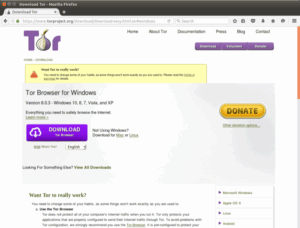
These include peer-to-peer and privacy-focused networks and can only be accessed using special tools like the TOR browser. These networks use the infrastructure of the Internet for communications, but access to them is restricted. Darknets are designed for anonymity and privacy, making them ideal for criminals to communicate and buy and sell illegal goods and services.
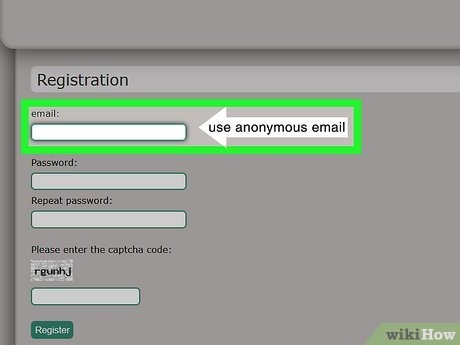
But a single set is generally enough if it’s just about one or a few “informational” visits. A discrete online identity, which has nothing to do with your present one. Separate email, phone number, anonymous payment channel,…..the list can be long based on what you aspire to get involved with on the dark web. These operating systems send every outgoing request, not just the web browsing ones, through the Tor protocol, ensuring robust protection. Besides, some additional protective measures may include application sandboxing, erase-on-shutdown, etc., based on a particular OS. People use it to share information when their local governments act hostile or snoop extensively.
It also opened the way for sharing illegal pornographic material and pirated data. One of the key tools used on the Dark Web today was first released in 2002 – Tor, The Onion Router. Users gain greater anonymity online when using Tor because it encrypts Internet traffic and passes through several nodes. Government developed Tor so their operatives could remain untraceable. The deep and dark web is a treasure-trove of information on threat actor activity, however making use of this resource to protect your organization can be (to the uninitiated), challenging. As a rule, this side of the internet hides content, identities, and locations from third parties that are common throughout the ‘surface web’ (mainstream, public websites).