It is estimated to be worth around 2.55 trillion dollars and is one of the biggest contributors to addiction globally. The black market is driven by the supply and demand for goods and services that are in short supply or prohibited, often at prices higher than the legal market. Operating discreetly, the black market involves the buying and selling of prohibited goods, often evading government regulations and taxes. Neither are those who benefit from illicit trade always careful to hide in the shadows.

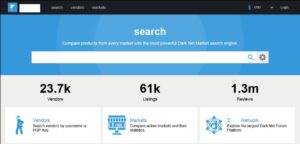
Established in 2019, Russian Market is a well-known and highly regarded data store on the dark web, specializing in the sale of PII and various forms of stolen data. Despite its name, the marketplace operates primarily in English and serves a global audience. It has gained a reputation for being a reliable source of high-quality data for cybercriminals. It is a hub for financial cybercrime and offers a wide range of illicit services and stolen data that cater to sophisticated cybercriminals.
What Is Being Done To Curb The Trade?
- In this article, we will explore the enigmatic world of the black market, shedding light on what it is, how it operates, and the various implications it has on our society.
- The underground economy includes a wide range of goods and services traded outside legal channels.
- Meanwhile, an estimated 53.2% of cigarette sales in New York state in 2018 (latest figures) were facilitated through underground economic transactions.
- He holds several advisory positions at various international think tanks and in 2018 joined the Payne Institute for Earth Resources at the Colorado School of Mines as non-resident fellow.
- This is especially true in less developed areas, where shadow markets tend to account for more of a percentage of gross domestic product than official economies.
- This reliance on trust is a substitute for the legal protections available in regulated markets, where disputes can be resolved through the court system.
The prevalence of counterfeit medicines, cosmetics, and electronics in the black market can have severe consequences for public health. Street vendors in countries where there is little enforcement of copyright law, particularly in Asia and Latin America, often sell copies of films, music CDs, and computer software such as video games, sometimes even before the official release of the title. Copyright-holders and other proponents of copyright laws have found this phenomenon hard to stop through the courts, as the operations are distributed and widespread,citation needed traversing national borders and thus legal systems. The issue is compounded by widespread indifference to enforcing copyright law, both with governments and the public at large. Additionally, not all people agree with copyright laws, on the grounds that they unfairly criminalize competition, allowing the copyright-holder to effectively monopolize related industries. Copyright-holders also may use region-coding to discriminate against selected populations pricewise and availability-wise.
Nat Geo’s ‘Trafficked’ Reveals World Of Underground Black Markets And What Drives Them
The reasons that underground economies exist are numerous, but trends indicate that how economically developed an area is dictates how strong (or weak) its shadow economy will be. Estimates vary widely, but some put the underground economy between 6.4% and 12% of U.S. gross domestic product (GDP). GDP was estimated at $27.06 trillion, which puts the underground economy somewhere between $1.7 trillion and $3.2 trillion. There are a range of markets available to buyers and sellers that allow them to exchange goods and services. In 1864, for example, the Eleventh Wisconsin Infantry surprised a boatload of men and women carrying supplies of coffee, salt, and a chest full of merchandise from Union-occupied Louisiana to outlying Confederate forces.
For example, if an Australian was to illegally purchase an organ in the Philippines, they could be prosecuted there but not under Australian law. “We don’t currently have what they call extra-territorial jurisdiction covering the laws that in Australia prohibit trade in organs,” Professor Martin explains. Tax havens can offer anonymity to money launderers due to the lax policies on funds deposited in their countries. Other outlets for black money include real estate, jewelry, cash, bullion investments, and cryptocurrencies.
Access Exclusive Templates
Governments, businesses, and consumers must work together to combat these activities, implementing effective measures and regulations to mitigate the negative economic effects. By promoting transparency, fostering international cooperation, and raising awareness, efforts can be made to address the economic consequences and protect the integrity of legal trade. Black market, trading in violation of publicly imposed regulations such as rationing laws, laws against certain goods, and official rates of exchange among currencies. The impact of the black market on society and the economy is substantial and encompasses several critical dimensions. Firstly, the black market poses a significant threat to legal economies, undermining their stability and growth.
The sellers in both examples have earned money from legal sources but evaded taxes. No one has greater cause to feel hard done by than Britain’s six million smokers, who are now required to pay between £12 and £18 for a pack of cigarettes if they want to stay on the right side of the law. Since it is UK government policy to make tobacco unaffordable, a large and growing number of them have decided to starve the beast and buy packs of cigarettes for £5 on the black market instead. The black market refers to illegal trading activities that occur outside the boundaries of the formal economy. By adopting these practices, you can contribute to the eradication of black market activities and support legitimate trade. A clue to the explosion of illicit trade is the relentless rise of money laundering.
The word offshore — as in offshore finance — vividly captures this sense that illicit trade takes place somewhere else. All signify a clarity, an ability to draw moral and economic lines and patrol their boundaries that is confounded in practice. This is the most dangerous of all these illusions, because it treads on moral grounds and arguably lulls citizens — and hence public opinion — into a sense of heightened righteousness and false security. Lying off the borders of United States, Mexico is the state with no major strict implications of laws.
Mastering The Markets: 7 Best Trading Sy
The result was an era of organized crime and an estimated 500 million US dollars (USD) in lost tax revenues annually. The black market (also called the underground, unofficial, or shadow economy) refers to an area of economic activity where the buying and selling of goods and services is conducted illegally. Many goods and services are simply illegal to sell; examples include cocaine, assault rifles, prostitution, the body parts of endangered animals, fake passports, and bootlegged (illegally recorded) CDs and DVDs. When people desire goods that they cannot obtain simply by going to a store and purchasing them, they are often willing to pay very high prices to anyone who can provide them.
Which Country Has The Largest Underground Economy?
A black market is an economic activity that occurs outside government-sanctioned channels. Illegal market transactions usually occur under the table to let participants avoid government price controls or taxes. The goods and services offered in a black market can be illegal, meaning their purchase and sale are prohibited by law, or they can be legal but transacted to avoid taxes. Black markets are also known as illegal markets, shadow markets, or underground markets.
The Illegal Economy
Which means that not only is illicit trade on the rise, but its interplay with social crisis — conflict, corruption, exploitation — is more complex than it has been since the abolition of the Atlantic slave trade. The existence of black markets serves as an example of a larger debate over whether governments should attempt to legislate morality. Libertarians have argued that the only purpose of the government is to guarantee private property.
Networks of stateless traders in illicit goods are changing the world as much as terrorists are — probably more. If you have ever worked “under the table” or “off the books” and not reported the income from it, you’ve participated in the shadow economy. The unreported economy seeks to evade the institutionally established fiscal rules as codified in the tax code. Under-the-table employment and untaxed private transactions that are otherwise legal fall into this category.
Wild animals are also hunted and killed for their meat, hide, and organs, the latter of which and other animal parts are sold for use in traditional medicine. In today’s increasingly regulated and interconnected global financial landscape, the fight against financial c… Developing a successful trading system is an essential factor to succeed in financial markets today. If you look at the picture above, you’ll see that the economy is mathematical, but underneath that heading, it tells you some buy and sell information. The first step in your journey toward a lucrative smuggling career is to find Black Market Agents.
Cryptocurrencies like Bitcoin have further complicated the situation by providing a means for anonymous financial transactions (Investopedia). The illicit oil trade is a significant global security concern, as it provides substantial funding to dangerous non-state actors. It is estimated that the illegal oil market is worth approximately US$133 billion annually, with around US$1.7 trillion in oil production globally each year. This illicit trade enables groups such as ISIS, Mexican drug cartels, Italian Mafia, Eastern European criminal organizations, Libyan militias, and Nigerian rebels to finance their activities, perpetuating instability and posing a threat to global security. The trade-related black market encompasses various illegal activities involving the trafficking of goods and services, which can have significant economic and social impacts. In this section, we will provide an introduction to trade-related black market activities and explore their overall impact.